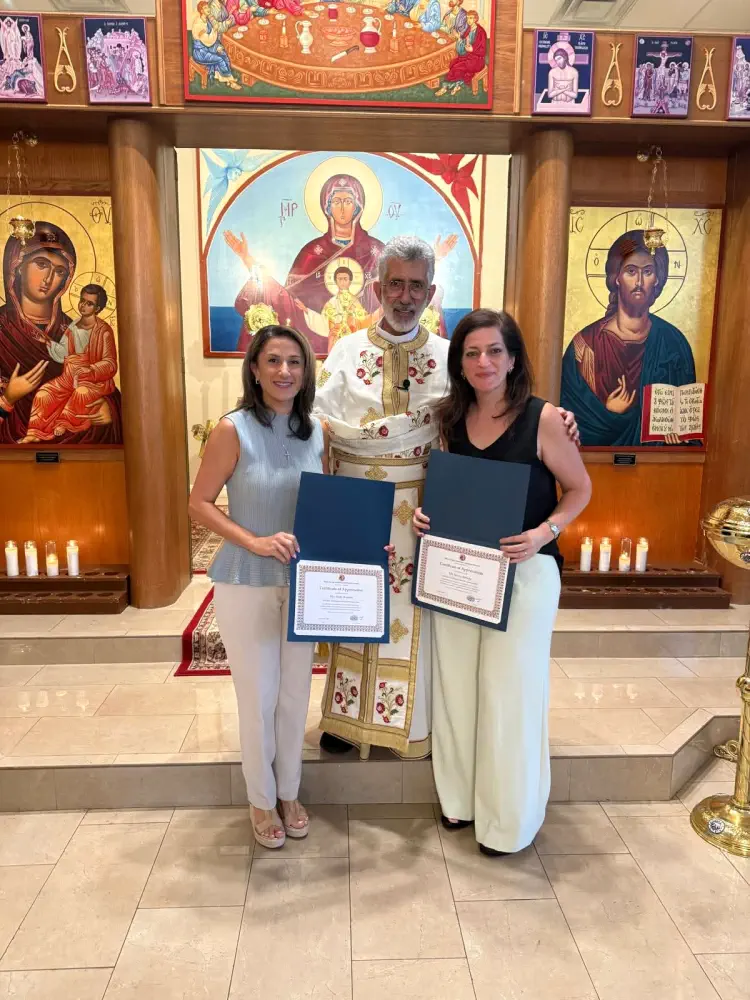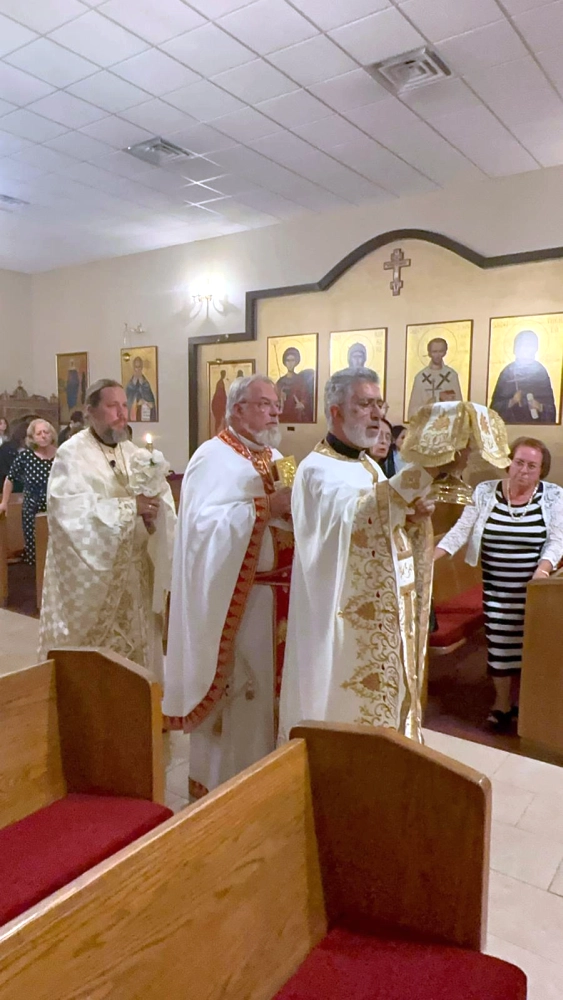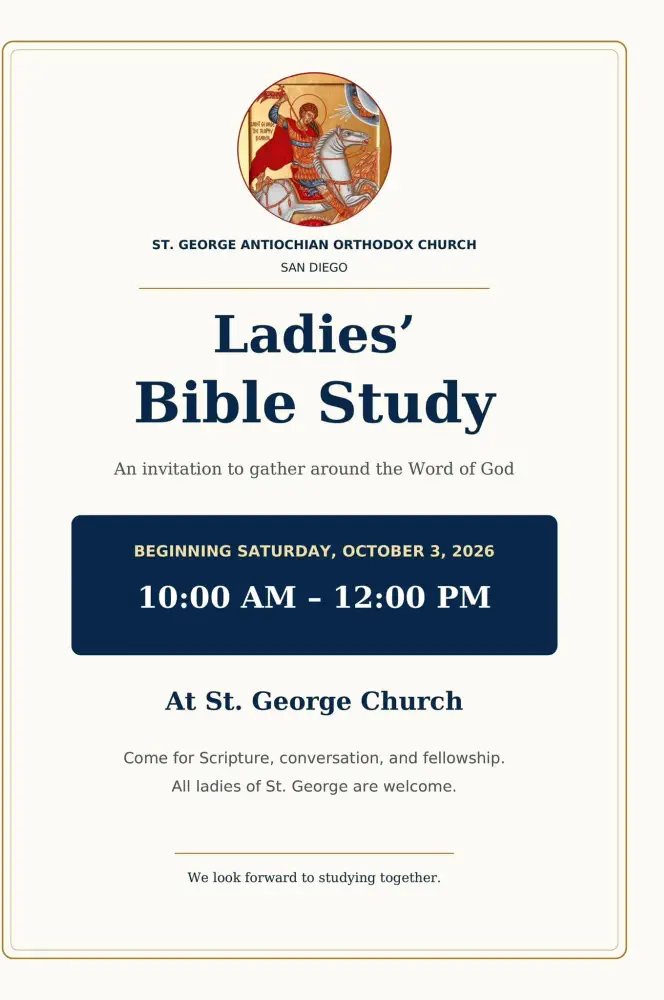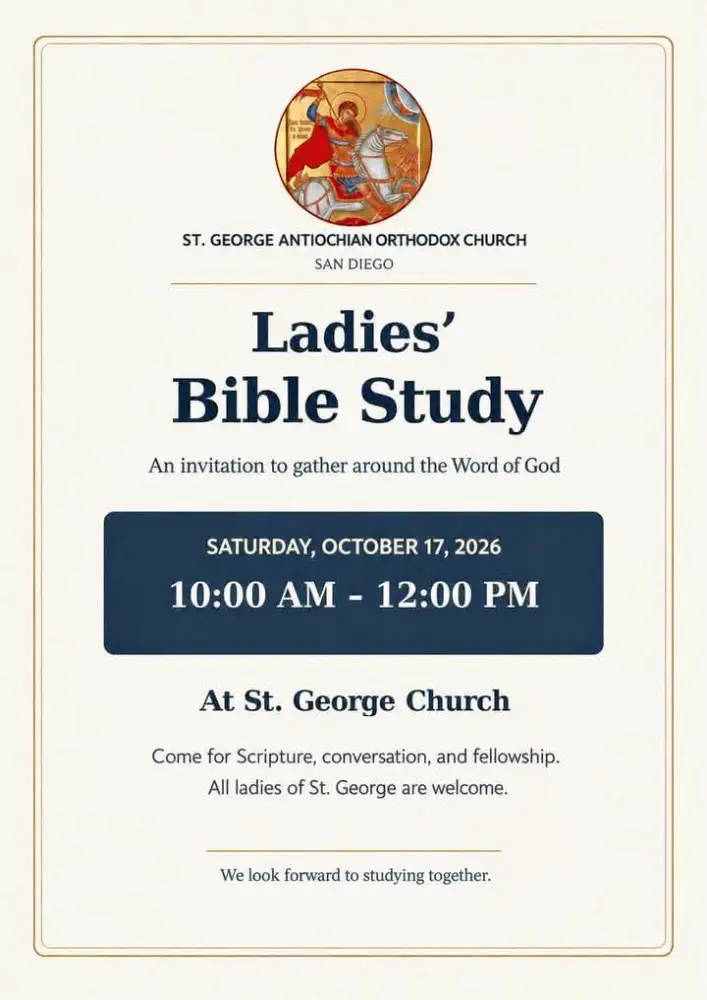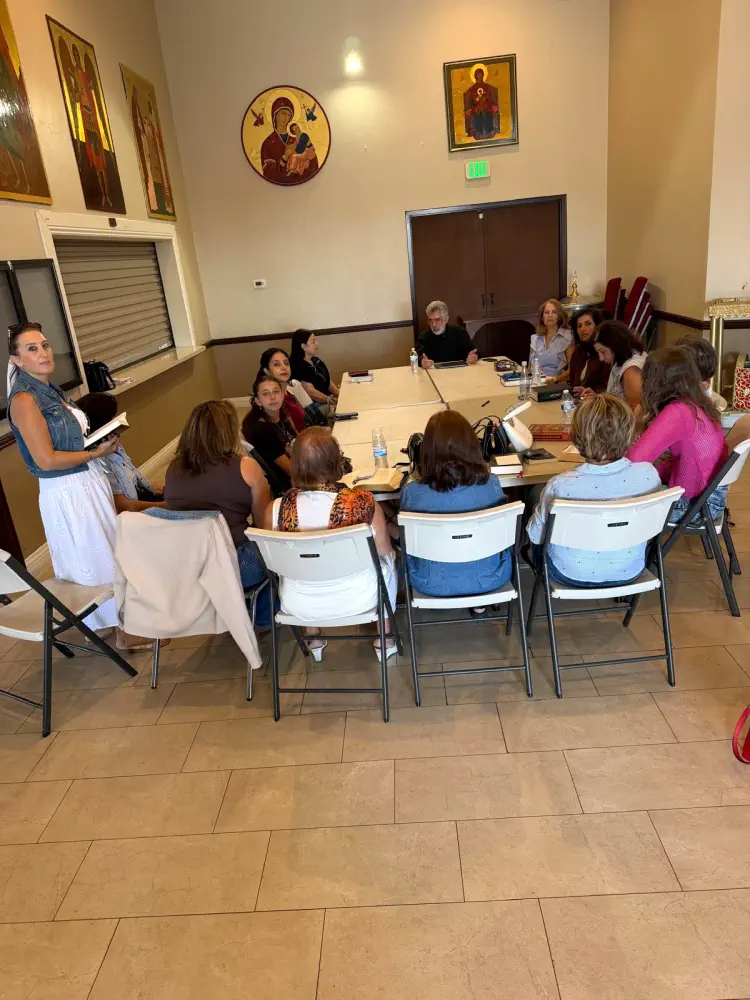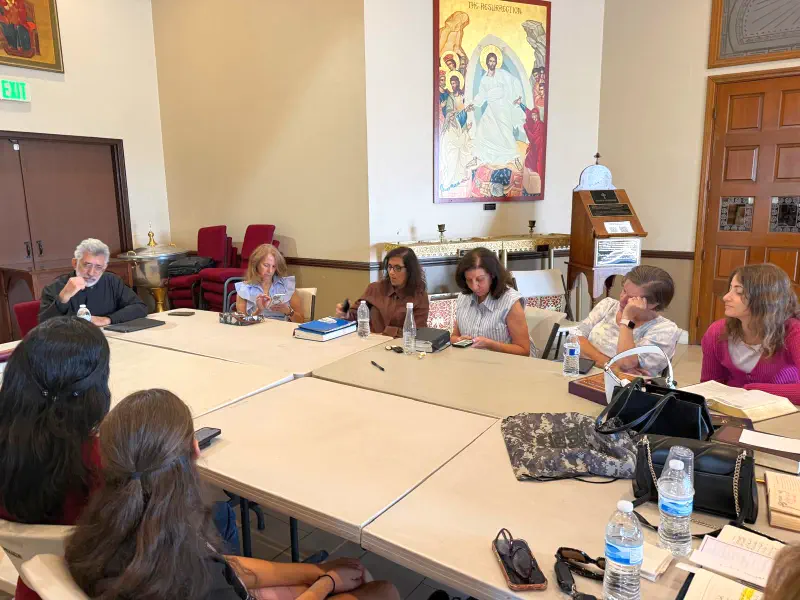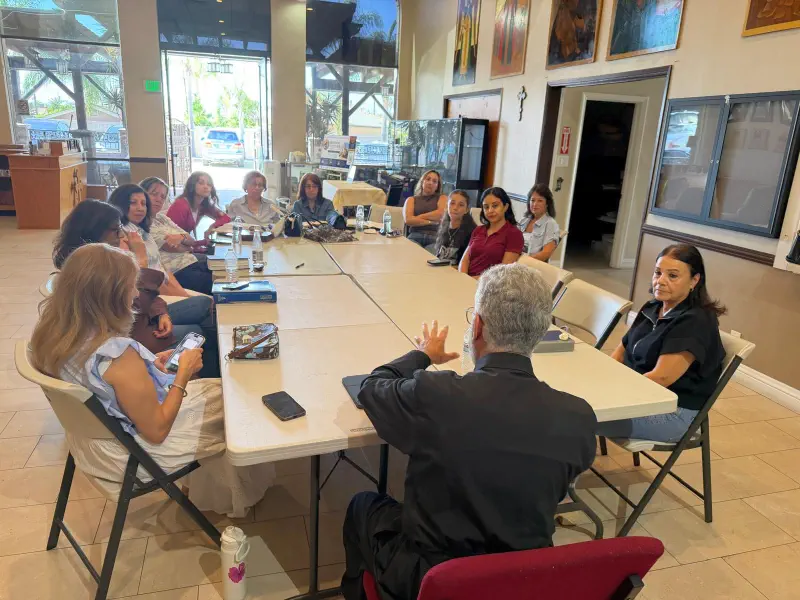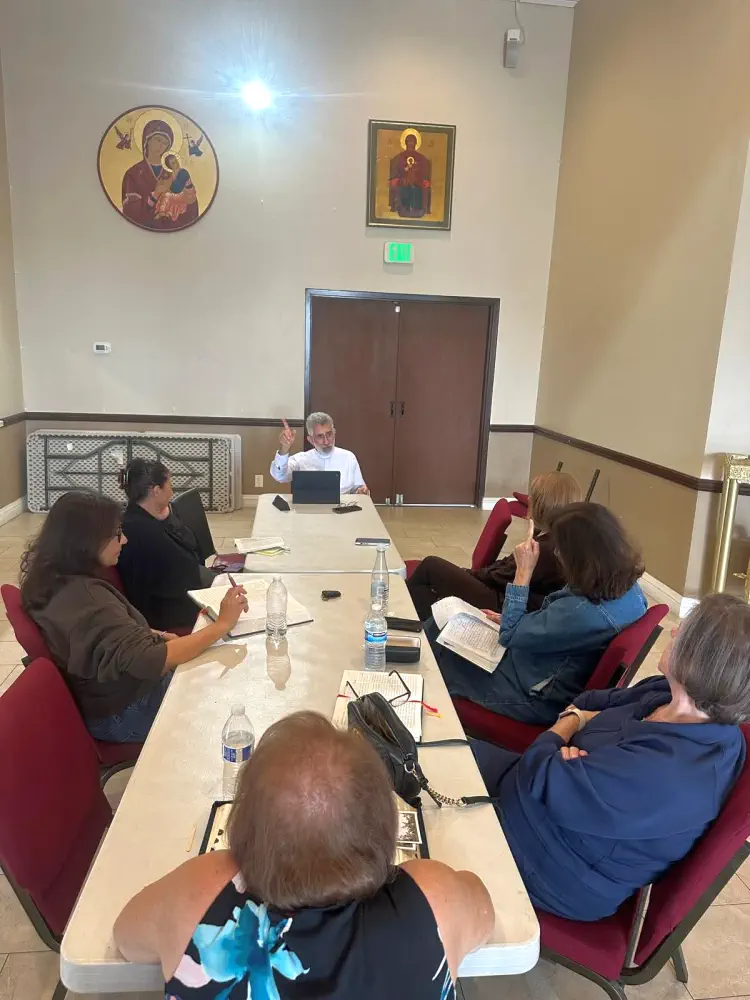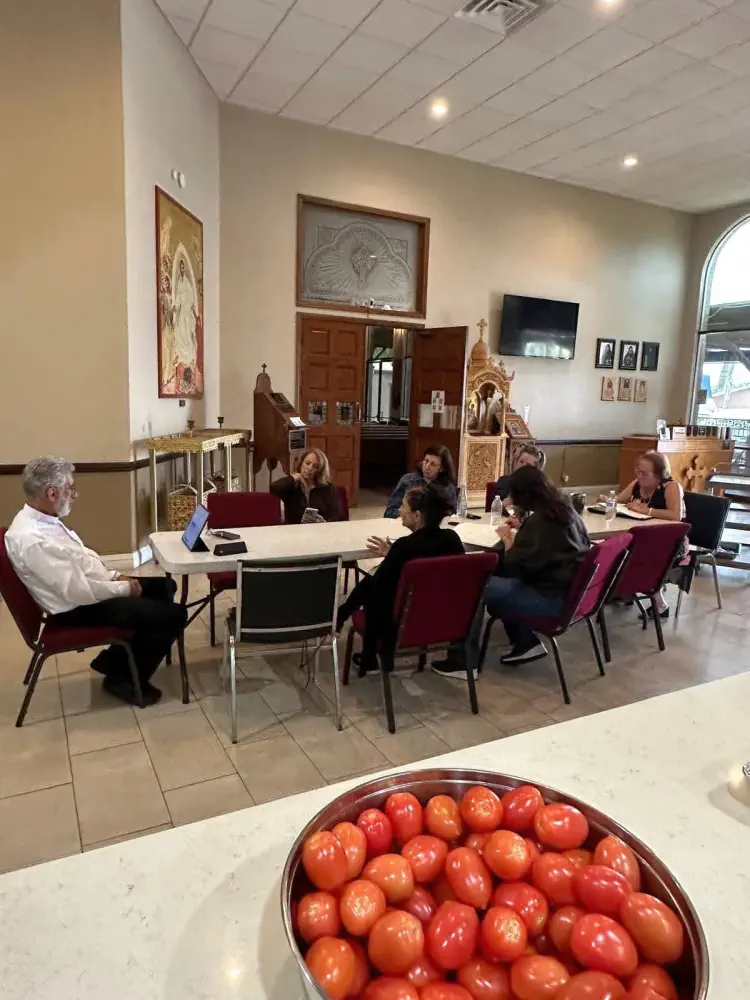
Our bi-weekly Bible Study Meeting for the Ladies started on Saturday October 3rd with the Gospel of St. John.I was talking in Arabic with an instantaneous and dedicated text translator to English. So that some theological words could not be missed by anyone.God bless our Ladies!
الحلقة الانجيلية لهذا اليوم السبت ١٧ أكتوبر ٢٠٢٦
عندما يبدأ سفر التكوين بعبارة «في البدء خلق الله السماوات والأرض» (تك 1: 1)، فإنه يتحدث عن بدء الخليقة وبداية الزمن، أي عن اللحظة التي أوجد فيها الله الكون من العدم. أما القديس يوحنا، فعندما يقول: «في البدء كان الكلمة» (يو 1: 1)، فإنه يرتفع بنا إلى ما قبل الخليقة والزمن، ليعلن أزلية الكلمة الذي كان موجودًا قبل كل الدهور، والذي به خُلق كل شيء.
وتتميّز مقدمة إنجيل يوحنا عن مقدمات الأناجيل الإزائية الثلاثة:
* مرقس: يبدأ بيوحنا المعمدان الذي يهيّئ الطريق لمجيء المسيح المنتظر.
* متى: يبدأ بنسب يسوع المسيح إلى إبراهيم وداود، معلنًا مجيئه ملكًا ليقيم ملكوت الله.
* لوقا: يبدأ بمقدمة تاريخية وأدبية، ثم يعرض ميلاد المعمدان والمسيح، مبرزًا محبة الله للإنسان وخلاصه.
* يوحنا: يرتفع بنا إلى ما قبل الزمن والخليقة، ليعلن أن المسيح هو الكلمة الأزلي، المولود من الآب قبل كل الدهور، الذي تجسّد ليعيد الإنسان إلى الشركة مع الله.
الخلاصة: بينما يبدأ سفر التكوين ببدء الخليقة والزمن، وتبدأ الأناجيل الإزائية من أحداث التدبير الالهي في التاريخ البشري، يبدأ يوحنا من الأزل، كاشفًا لنا هوية المسيح الإلهية وسرّ تجسده.
وتُظهر مقدمته (يوحنا 1: 1–18) أن الذي به خُلق العالم هو نفسه الذي دخل العالم متجسدًا ليجدّد خليقته، ويمنح الإنسان الحياة والنور والبنوّة لله، ويقوده إلى الشركة في مجده الأبدي.
وهكذا، فإن «في البدء» في سفر التكوين تعلن بداية الخليقة، أما «في البدء» في إنجيل يوحنا فتعلن أزلية الخالق.
Today’s Saturday October 17th, 2026, Gospel Reflection
When the Book of Genesis begins with the words, “In the beginning God created the heavens and the earth” (Genesis 1:1), it speaks of the beginning of creation and the beginning of time—that is, the moment when God brought the universe into existence out of nothing.
However, when St. John declares, “In the beginning was the Word” (John 1:1), he takes us beyond creation and time, revealing the eternity of the Word, who existed before all ages and through whom all things were created.
The introduction to the Gospel of John differs from those of the three Synoptic Gospels:
* Mark: Begins with John the Baptist, who prepares the way for the coming of the long-awaited Messiah.
* Matthew: Begins with the genealogy of Jesus Christ, tracing His lineage to Abraham and David, proclaiming His coming as King to establish the Kingdom of God.
* Luke: Begins with a formal historical and literary introduction, followed by the accounts of the births of John the Baptist and Jesus Christ, emphasizing God’s love for humanity and His saving work.
* John: Takes us beyond time and creation, revealing that Christ is the eternal Word, begotten of the Father before all ages, who became incarnate to restore humanity to communion with God.
In summary: While the Book of Genesis begins with the beginning of creation and time, and the Synoptic Gospels begin with the events of God’s divine economy of salvation within human history, John begins from eternity, revealing Christ’s divine identity and the mystery of His Incarnation.
His Prologue (John 1:1–18) reveals that the One through whom the world was created is the very One who entered the world through the Incarnation to renew His creation, granting humanity life, light, and adoption as children of God, and leading us into communion with His eternal glory.
Thus, “In the beginning” in Genesis proclaims the beginning of creation, while “In the beginning” in the Gospel of John proclaims the eternity of the Creator.
Bible Study Saturday October 31st, 2026
Continuation of the Bible Study in the Gospel of Holy Evangelist John
The Word (Logos) in the Gospel of John: Its Theological Meaning and Relationship to Christ
St. John the Evangelist begins his Gospel with a profound theological declaration: “In the beginning was the Word” (John 1:1). In the original Greek, the term translated as “Word” is Logos (Λόγος), a concept familiar to both Jewish and Greek thought, although its meanings differed between these traditions.
In Greek philosophy, the Logos was associated with reason and the rational principle that orders the universe. In Jewish tradition, however, the Word of God was understood as God’s active and creative Word, through which He reveals His will and accomplishes His works.
The Psalmist declares: “By the word of the Lord the heavens were made, and all the host of them by the breath of His mouth” (Psalm 33:6).
Thus, the concept of God’s creative Word was not foreign to Jewish thought, just as the concept of the Logos was familiar to Greek philosophy.
However, St. John gives this term a unique theological meaning. The Logos is not merely divine reason, a cosmic principle, or an expression of God’s thought. Rather, the Logos is an eternal divine Person, the Only-Begotten Son, who was with God, who is God, and who became incarnate in the Person of Jesus Christ (John 1:1, 14).
A word expresses and reveals a thought. In this sense, Christ, the eternal Word of God, is the perfect revelation of the Father. As the Lord Himself declares: “He who has seen Me has seen the Father” (John 14:9).
The Logos and the Words of Christ in the Gospel of John
The Greek term Logos appears in numerous passages throughout the Gospel of John. Depending on the context, it is translated into Arabic as “My word,” “words,” or “saying,” as in the following passages:
* John 5:24; 15:3
* John 8:31–32, 51
* John 14:24; 17:14
* John 15:7
These passages reveal a profound theological relationship between Christ, the Incarnate Word of God, and the words He speaks and proclaims.
Christ’s words are not merely moral teachings or a collection of commandments. They are divine revelation, communicating truth and life.
Whoever receives the words of Christ in faith receives Christ Himself, enters into communion with Him, and receives eternal life.
The Lord declares: “Most assuredly, I say to you, he who hears My word and believes in Him who sent Me has everlasting life” (John 5:24).
He also says: “If you abide in Me, and My words abide in you, you will ask what you desire, and it shall be done for you” (John 15:7).
To abide in Christ’s words cannot be separated from abiding in Christ Himself. His divine truth cannot be separated from His Person, nor can faith in Him be separated from the acceptance of His Word.
This is why Christ declares: “I am the way, the truth, and the life” (John 14:6).
And in His prayer to the Father, He says: “Your word is truth” (John 17:17).
Christ is the Truth incarnate, and His words reveal that life-giving Truth.
The Distinction Between Speech and the Logos
In John 8:43, we encounter a remarkable linguistic and theological distinction. The Lord says:
“Why do you not understand My speech? Because you are not able to listen to My word.”
In the original Greek, the Evangelist uses two different expressions:
* Lalia (λαλιά): Refers to speech, the manner of speaking, or verbal expression.
* Logos (λόγος): Here refers to the word or message proclaimed by Christ.
The meaning may therefore be understood as follows:
“Why do you not understand what I am saying to you? Because you are unwilling or unable to receive the Word that I proclaim.”
The difficulty is not simply an inability to understand the language or the meaning of Christ’s statements. Rather, it lies in a spiritual unwillingness to receive the truth He reveals.
They cannot truly understand His speech because they reject His Person and His message.
Thus, their rejection of Christ’s Word reflects their rejection of Christ Himself.
Nevertheless, an important distinction must be maintained between the ordinary linguistic use of logos in this verse and the title the Logos, which St. John attributes to the eternal Son in the Prologue of his Gospel.
Not every occurrence of the Greek word logos directly identifies the divine Person of the Son, although there is a profound theological relationship between Christ and the Word He proclaims.
Christ the Word of God and the Holy Scriptures as the Word of God
The Holy Scriptures are called the Word of God, while Christ Himself is revealed as the eternal and incarnate Word of God.
This does not mean that the Scriptures and the Person of Christ are identical. Rather, it reveals the profound relationship between them.
The Scriptures bear witness to Christ, and Christ is both the key to understanding the Scriptures and their ultimate fulfillment.
For this reason, the Lord tells the Jews:
“You search the Scriptures, for in them you think you have eternal life; and these are they which testify of Me” (John 5:39).
In the light of patristic interpretation, reading the Holy Scriptures is not limited to understanding historical events, religious teachings, or theological concepts.
It is, above all, a journey toward discovering the Person of Christ, to whom the sacred writings bear witness.
The more deeply a person meditates upon the Word of God in a spirit of prayer and faith, the more clearly the image of Christ is revealed.
The ultimate purpose of Scripture is not merely to communicate religious knowledge, but to lead the believer into living communion with God.
Christ is the Truth to whom the Scriptures testify and the Light that illuminates their deepest meaning.
Through His Word, His divine light shines within the believer’s heart, bringing spiritual renewal and new life.
Christ does not merely give us words that teach us how to live; He gives us Life itself.
This is why the Lord declares:
“The words that I speak to you are spirit, and they are life” (John 6:63).
The Epistle to the Hebrews likewise proclaims:
“For the word of God is living and powerful, and sharper than any two-edged sword” (Hebrews 4:12).
Thus, reading the Holy Scriptures is far more than studying sacred texts. It is an invitation to a personal encounter with Christ, the Living Word of God, who reveals the Father, enlightens our minds, renews our hearts, and leads us into eternal life.
الحلقة الإنجيلية ليوم السبت ٣١ ت١ ٢٠٢٦
استكمال دراسة إنجيل القديس يوحنا البشير
الكلمة (اللوغوس) في إنجيل يوحنا: معناها اللاهوتي وعلاقتها بالمسيح
يبدأ القديس يوحنا الإنجيلي إنجيله بإعلان لاهوتي عميق: «في البدء كان الكلمة» (يوحنا 1: 1). والكلمة هنا هي في الأصل اليوناني «لوغوس» (Λόγος)، وهو مصطلح معروف في الفكرين اليهودي واليوناني، وإن اختلفت دلالاته بينهما.
ففي الفلسفة اليونانية، ارتبط اللوغوس بالعقل والمبدأ المنظِّم للكون، بينما ارتبط في التقليد اليهودي بكلمة الله الفاعلة والخالقة، التي بها يُظهر الله إرادته ويُتمّم أعماله.
ونقرأ في المزمور: «بكلمة الرب صُنعت السماوات، وبنسمة فيه كل جنودها» (مزمور 33: 6). وهكذا، فإن مفهوم الكلمة الإلهية الخالقة لم يكن غريبًا عن الفكر اليهودي، كما أن مفهوم اللوغوس كان معروفًا في الفلسفة اليونانية.
ولكن القديس يوحنا يمنح هذا المصطلح بُعدًا لاهوتيًا فريدًا؛ فاللوغوس ليس مجرد عقل إلهي أو مبدأ كوني أو تعبير عن فكر الله، بل هو شخص إلهي أزلي، الابن الوحيد، الذي كان عند الله، وهو الله، والذي تجسّد وصار إنسانًا في شخص يسوع المسيح (يوحنا 1: 1، 14).
ومن المعروف أن الكلمة تعبّر عن الفكر وتكشفه. وعلى هذا الأساس، يمكننا أن نفهم المسيح، كلمة الله الأزلي، بوصفه الإعلان الكامل عن الآب، إذ يقول الرب: «الذي رآني فقد رأى الآب» (يوحنا 14: 9).
اللوغوس وكلام المسيح في إنجيل يوحنا
ترد لفظة «لوغوس» في مواضع عديدة من إنجيل يوحنا، وقد تُرجمت في النص العربي أحيانًا إلى «كلامي» أو «كلام» أو «قول»، بحسب السياق، كما في:
* يوحنا 5: 24؛ 15: 3
* يوحنا 8: 31–32، 51
* يوحنا 14: 24؛ 17: 14
* يوحنا 15: 7
وهنا تبرز علاقة لاهوتية عميقة بين المسيح، كلمة الله المتجسّد، والكلمة التي ينطق بها ويعلنها.
فكلام المسيح ليس مجرد تعليم أخلاقي أو مجموعة من الوصايا، بل هو إعلان إلهي يحمل الحق والحياة. ومن يقبل كلام المسيح بإيمان، يقبل المسيح نفسه، ويدخل في شركة معه، وينال الحياة الأبدية.
يقول الرب: «الحق الحق أقول لكم: إن من يسمع كلامي ويؤمن بالذي أرسلني فله حياة أبدية» (يوحنا 5: 24).
ويقول أيضًا: «إن ثبتم فيّ وثبت كلامي فيكم، تطلبون ما تريدون فيكون لكم» (يوحنا 15: 7).
فالثبات في كلام المسيح لا ينفصل عن الثبات في شخصه. إذ لا يمكن الفصل بين المسيح وحقّه الإلهي الذي يعلنه، ولا بين الإيمان به وقبول كلمته.
ولهذا يقول المسيح عن نفسه: «أنا هو الطريق والحق والحياة» (يوحنا 14: 6)، ويقول في صلاته إلى الآب: «كلامك هو حق» (يوحنا 17: 17).
فالمسيح هو الحق المتجسّد، وكلامه هو إعلان هذا الحق الذي يهب الحياة.
التمييز بين الكلام واللوغوس
نجد في يوحنا 8: 43 تمييزًا لغويًا ولاهوتيًا لافتًا، إذ يقول الرب:
«لماذا لا تفهمون كلامي؟ لأنكم لا تقدرون أن تسمعوا قولي».
في النص اليوناني، يستعمل الإنجيلي لفظتين مختلفتين:
* لاليا (λαλιά): تشير إلى الكلام أو طريقة التعبير والخطاب.
* لوغوس (λόγος): تشير هنا إلى الكلمة أو الرسالة التي يعلنها المسيح.
وعليه، يمكن أن نفهم المعنى على النحو التالي:
«لماذا لا تفهمون ما أقوله لكم؟ لأنكم لا تستطيعون أن تقبلوا الكلمة التي أعلنها لكم».
فالمشكلة ليست مجرد صعوبة في فهم الألفاظ أو المعاني، بل تكمن في عدم الاستعداد الروحي لقبول الحق الذي يعلنه المسيح.
إنهم لا يفهمون كلامه لأنهم يرفضون شخصه ورسالته. وهكذا، فإن عدم قبول كلمة المسيح يعكس رفضًا للمسيح نفسه.
ومع ذلك، ينبغي التمييز بين الاستخدام اللغوي لكلمة «لوغوس» في الآية وبين لقب «الكلمة» الذي يطلقه يوحنا على الابن الأزلي في مقدمة إنجيله. فليست كل مرة ترد فيها لفظة «لوغوس» إشارة مباشرة إلى أقنوم الابن، وإن كانت هناك علاقة لاهوتية وثيقة بين المسيح وكلمته.
المسيح كلمة الله والكتاب المقدس كلمة الله
يُطلق الكتاب المقدس تعبير «كلمة الله» على الوحي الإلهي المدوَّن، كما يعلن أن المسيح نفسه هو «كلمة الله» الأزلي المتجسّد.
وهذا لا يعني التطابق بين الكتاب المقدس وشخص المسيح، بل يشير إلى العلاقة العميقة بينهما؛ فالكتاب المقدس يشهد للمسيح، والمسيح هو مفتاح فهم الكتاب المقدس وغايته.
ولهذا يقول الرب لليهود: «فتشوا الكتب، لأنكم تظنون أن لكم فيها حياة أبدية، وهي التي تشهد لي» (يوحنا 5: 39).
وفي ضوء التفسير الآبائي، لا تقتصر قراءة الكتاب المقدس على فهم النصوص والأحداث والتعاليم، بل تتجاوز ذلك إلى اكتشاف شخص المسيح الحاضر في شهادة الأسفار المقدسة.
فكلما تعمّق الإنسان في التأمل في كلمة الله بروح الصلاة والإيمان، انكشفت له صورة المسيح بصورة أوضح، وأدرك أن غاية الكتاب المقدس ليست مجرد تقديم معلومات دينية، بل قيادته إلى الشركة الحية مع الله.
إن المسيح هو الحق الذي تشهد له الأسفار المقدسة، والنور الذي يكشف أعماقها. ومن خلال كلمته، يشرق نوره في قلب المؤمن، ويمنحه حياة جديدة.
فالمسيح لا يقدّم لنا مجرد كلمات تعلّمنا كيف نحيا، بل يهبنا الحياة ذاتها.
ولهذا يقول الرب: «الكلام الذي أكلّمكم به هو روح وحياة» (يوحنا 6: 63).
ويؤكد الرسول بولس في رسالته إلى العبرانيين:
«لأن كلمة الله حيّة وفعّالة، وأمضى من كل سيف ذي حدّين» (عبرانيين 4: 12).
وهكذا، فإن قراءة الكتاب المقدس ليست مجرد دراسة لنصوص مقدسة، بل هي دعوة إلى لقاء شخصي بالمسيح، كلمة الله الحي، الذي يعلن لنا الآب، وينير عقولنا، ويجدّد قلوبنا، ويقودنا إلى الحياة الأبدية.