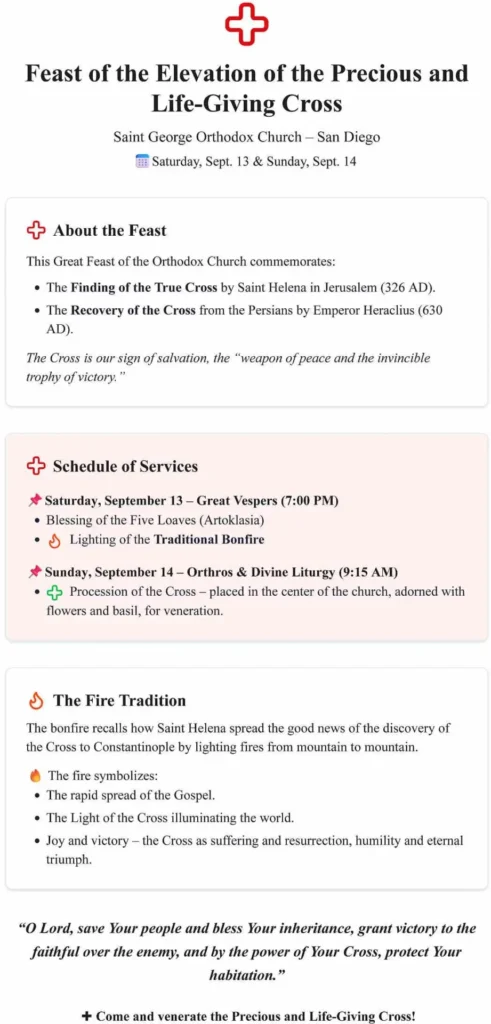
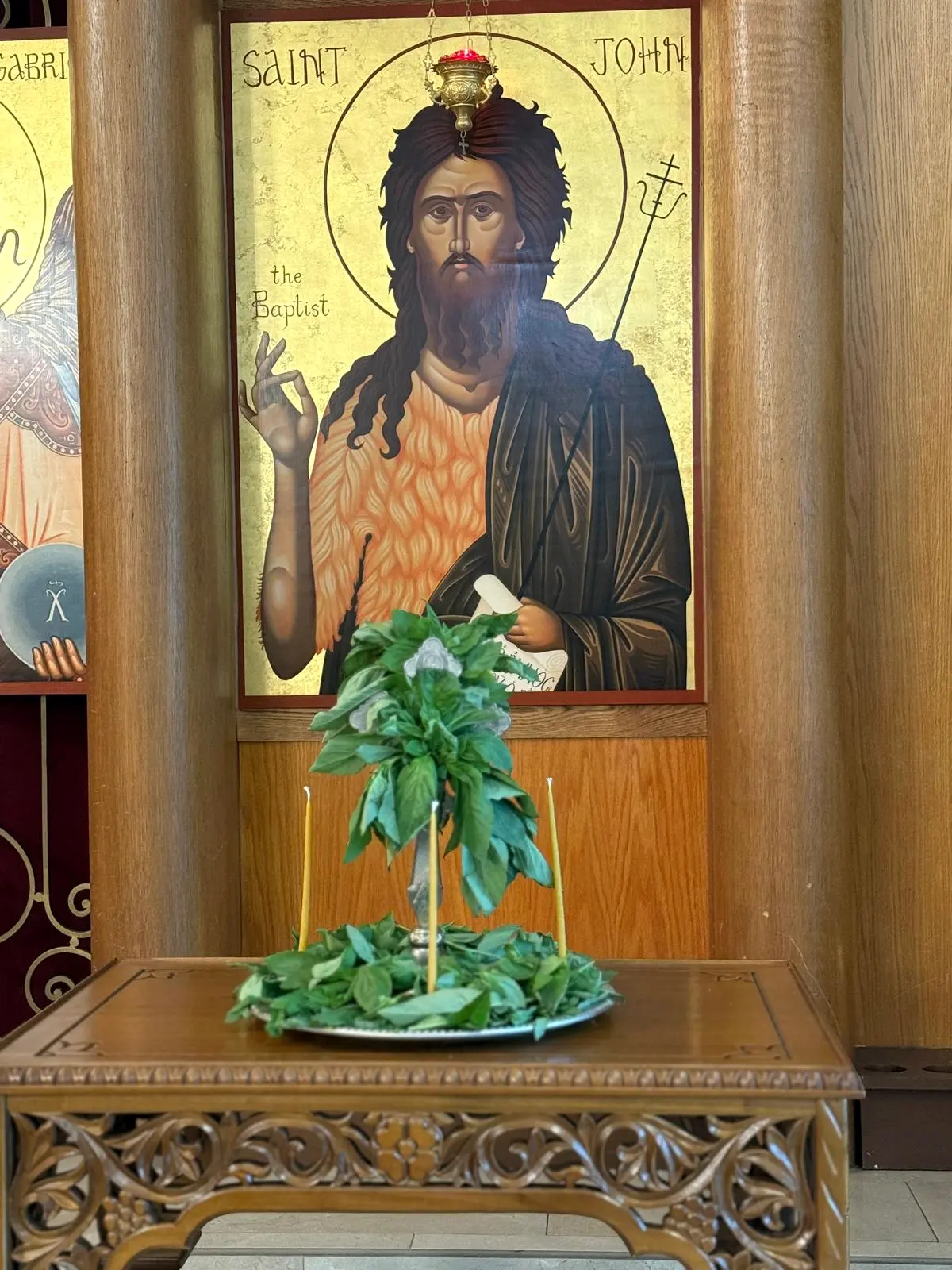
The Feast of the Elevation of the Precious and Life-Giving Cross is one of the Great Feasts of the Orthodox Church, celebrated on September 14. It is also known as the Feast of the Exaltation of the Cross. This is also a common name day for those named Stavroula/Stavros (from the Greek stavros, meaning “cross”).
This feast commemorates two main events:
1. The finding of the Cross by Saint Helena, the mother of Saint Constantine the Great, on Golgotha in 326 AD, at the place where Christ was crucified.
• At that spot, Saint Helena found a flower previously unknown, of rare beauty and fragrance, called Vasiliko (βασιλικόν), meaning basil or “the royal plant,” since the Greek word Basileus means “king.” Thus basil became associated with the Precious Cross of the Heavenly King, our Lord Jesus Christ, the King of Glory.
• Beneath the basil the Cross of Christ was discovered, along with the two crosses of the thieves and the inscription that read: “Jesus of Nazareth, King of the Jews.” To determine which was the True Cross, a sick woman was brought to kiss the three crosses. Nothing happened with the first or the second, but when she kissed the True Cross, she was immediately healed. As a funeral procession was passing, the body of the deceased was placed upon each of the crosses, and when it was laid upon the True Cross, the dead man came to life. Thus the Cross was called “Life-Giving,” because it gives life not only to that man, but to all who believe in Christ’s sacrifice and His glorious third-day Resurrection.
• When the True Cross was identified, it was lifted high for all the people to see, and they cried out: “Lord, have mercy,” as is still sung in the services of this feast today.
2. The recovery of the Cross from the Persians, who had seized it when they invaded Jerusalem in 614 AD. After Emperor Heraclius defeated the Sassanid Persians at the Battle of Nineveh in 627 AD, he recovered the Precious Cross and weakened the Sassanid dynasty.
• On March 21, 630 AD, Emperor Heraclius entered Jerusalem with Patriarch Zacharias (609–632), in great joy, carrying the Cross to return it to the Church of the Holy Sepulchre. But when he attempted to enter wearing his golden imperial robes, an angel of the Lord stopped him, saying: “It is not fitting for you to enter in royal garments, for the Heavenly King entered carrying His Cross in humility.”
• So on the following day Heraclius returned, dressed in sackcloth, barefoot, clothed in repentance and humility. He then carried the Cross, lifted it in a spiritual procession, and brought it into the Church of the Resurrection, where it was presented for veneration by the faithful.
⸻
Celebration of the Feast
• It is a holy day of repentance and fasting. On this day, the faithful renew their dedication before the crucified Lord and prostrate at His life-giving Cross.
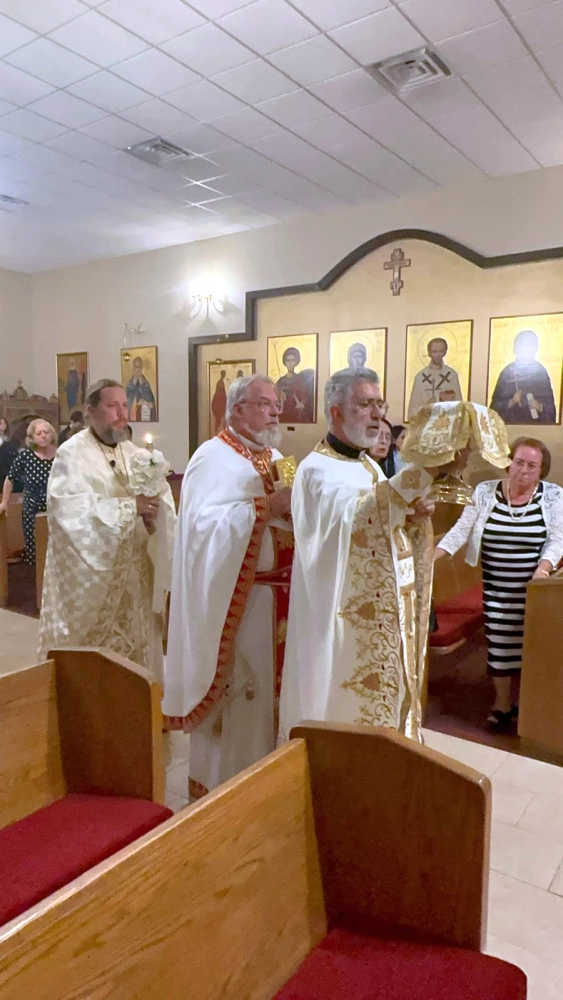
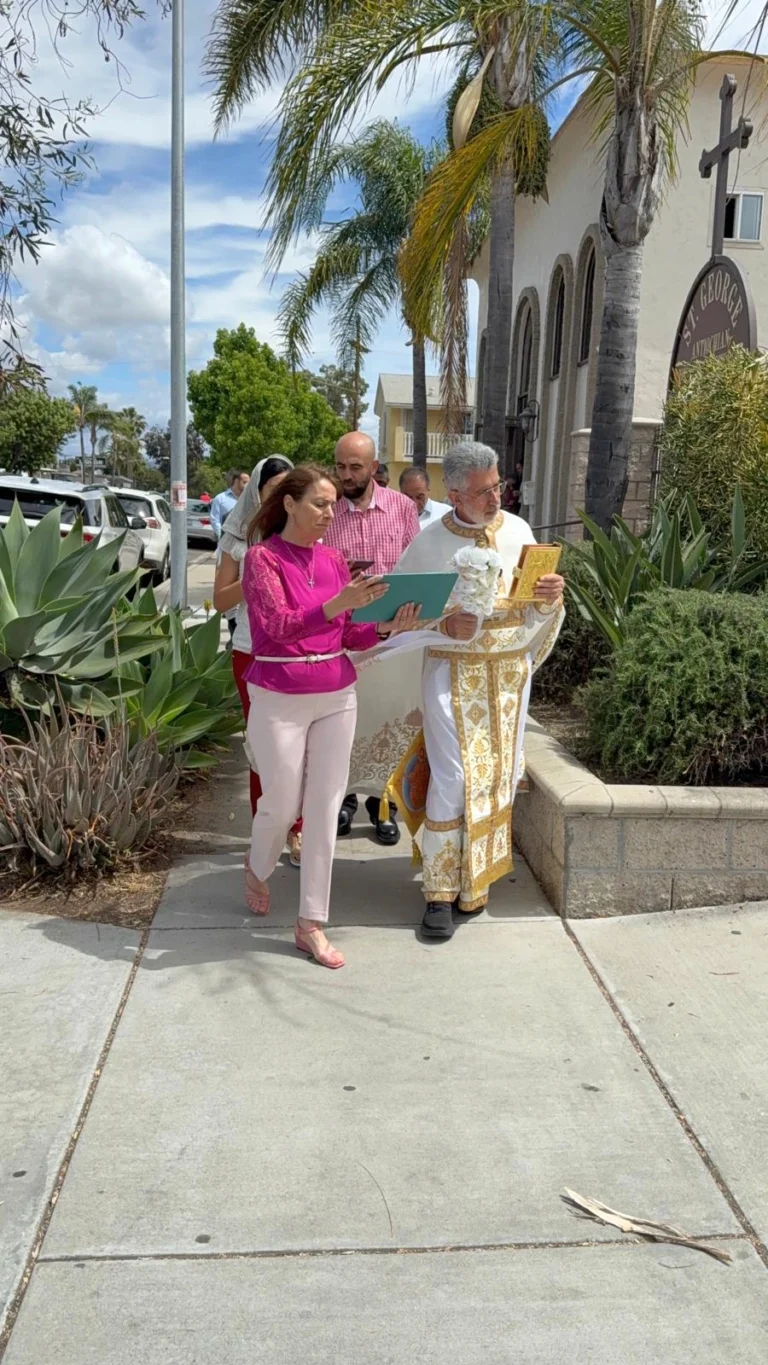
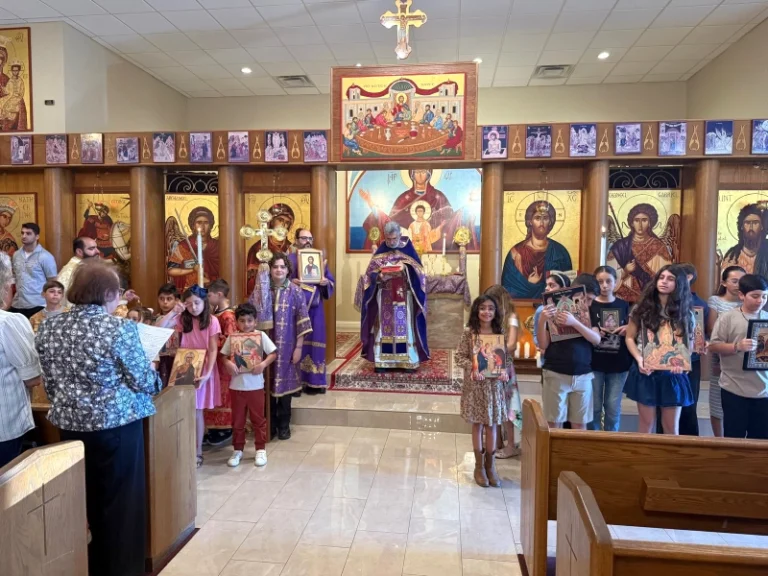
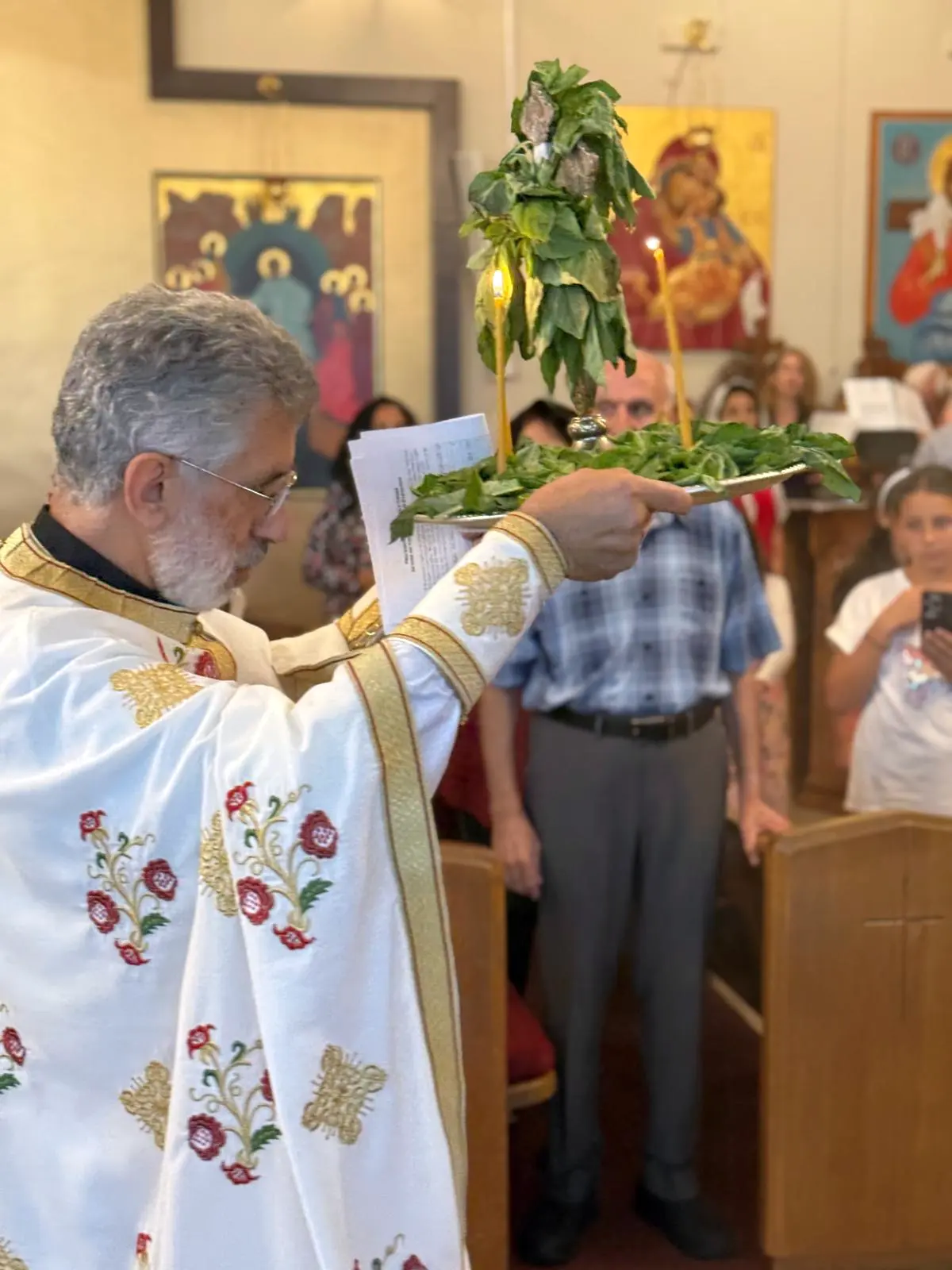
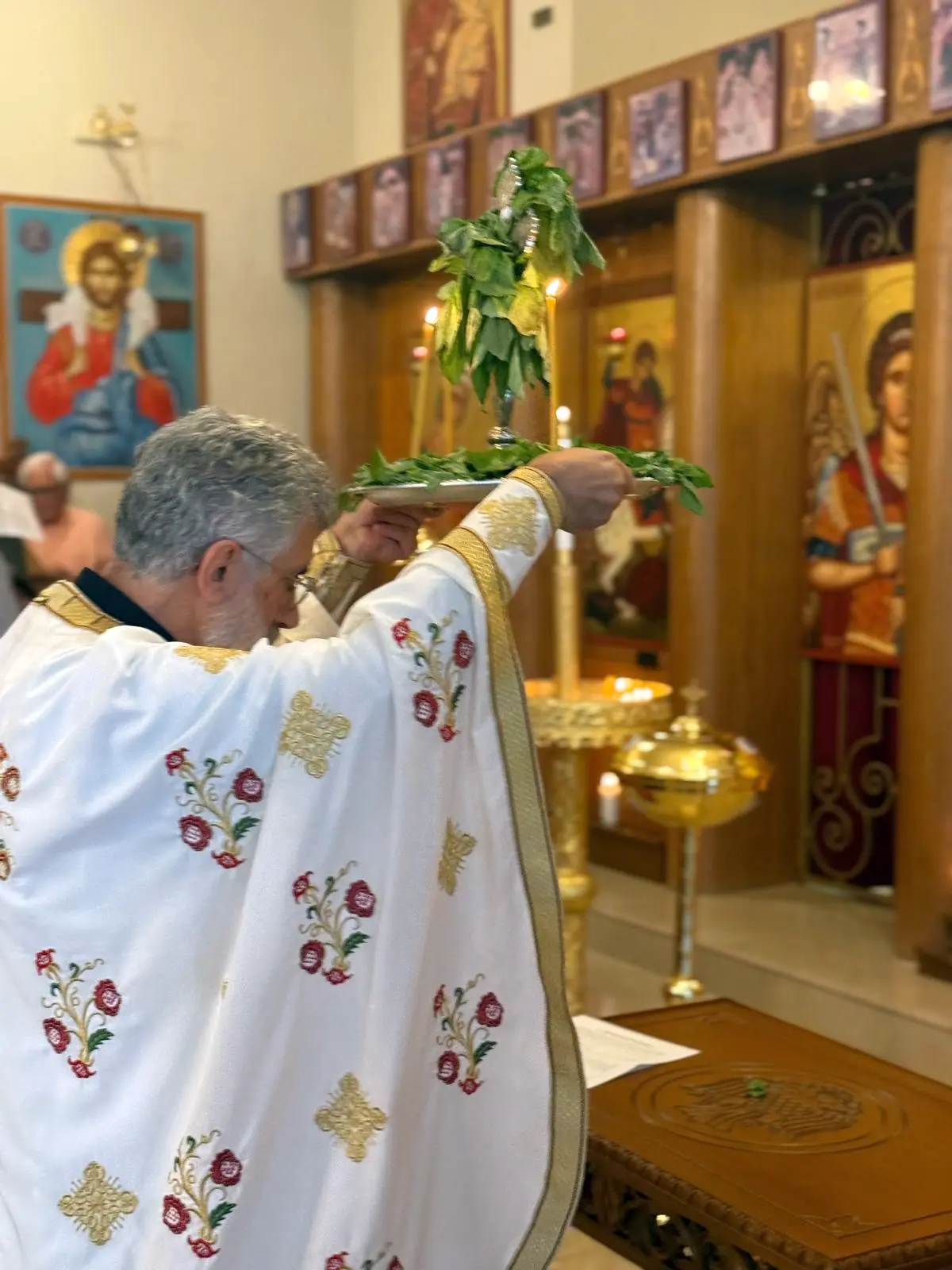
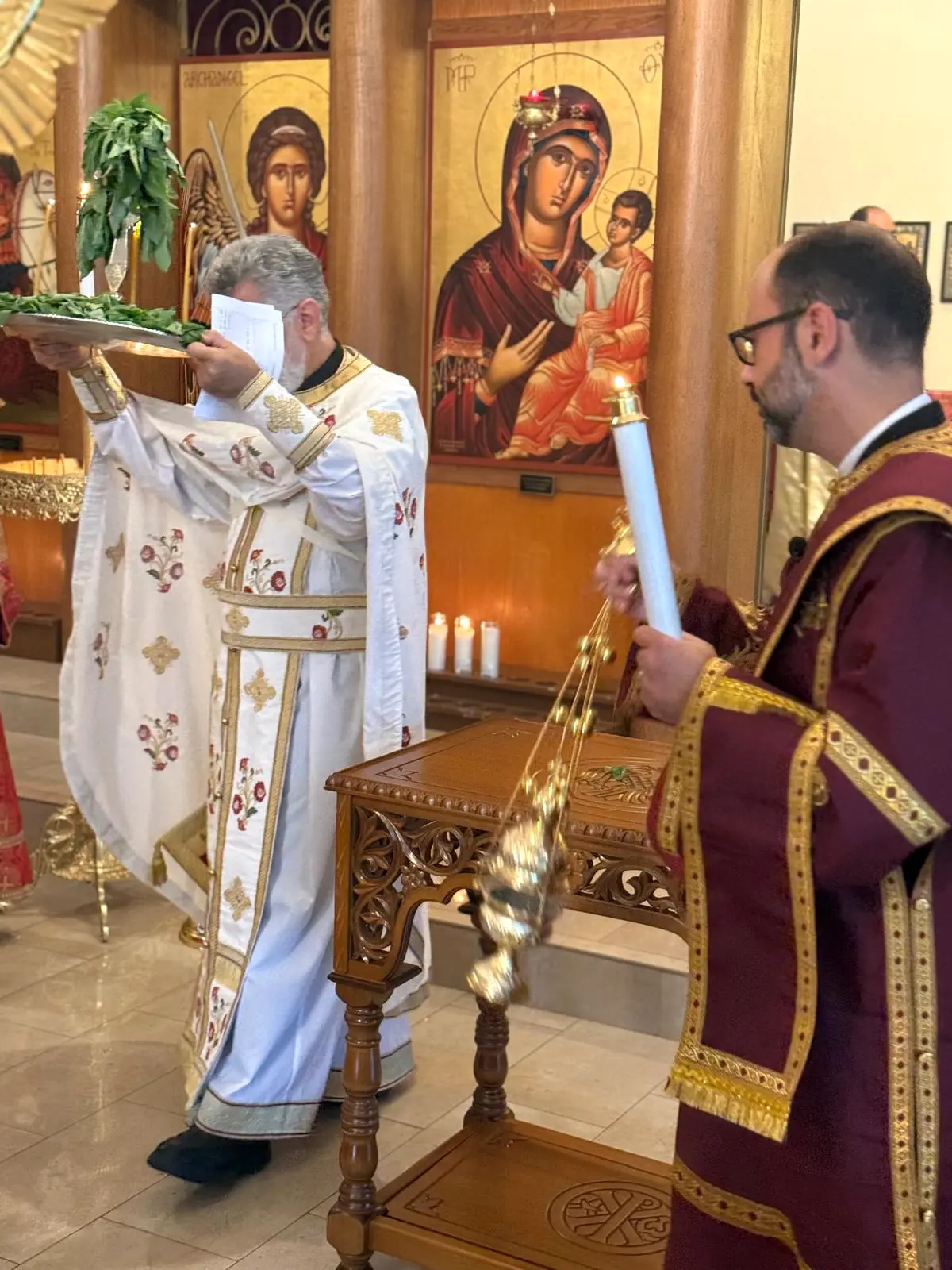
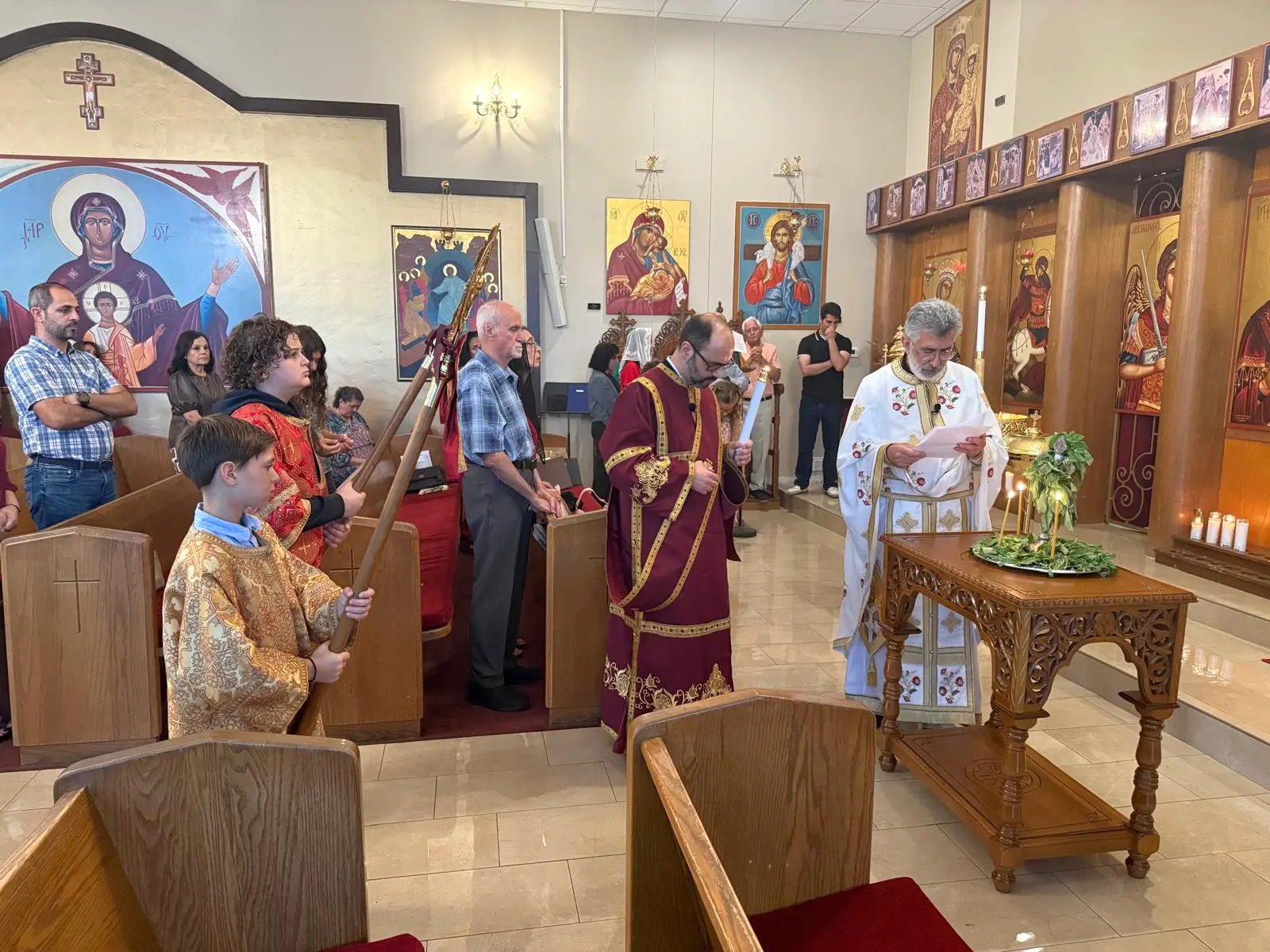
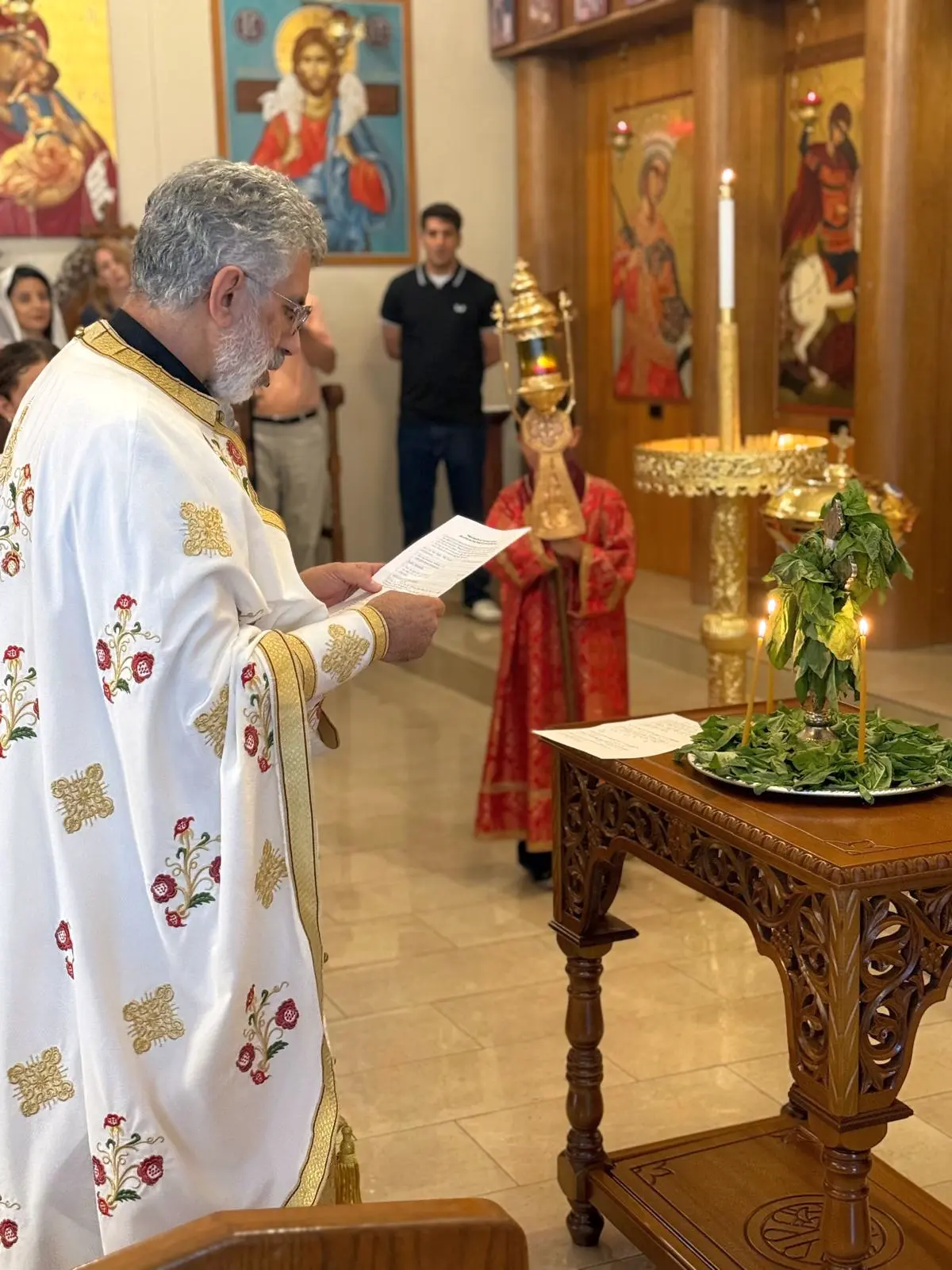
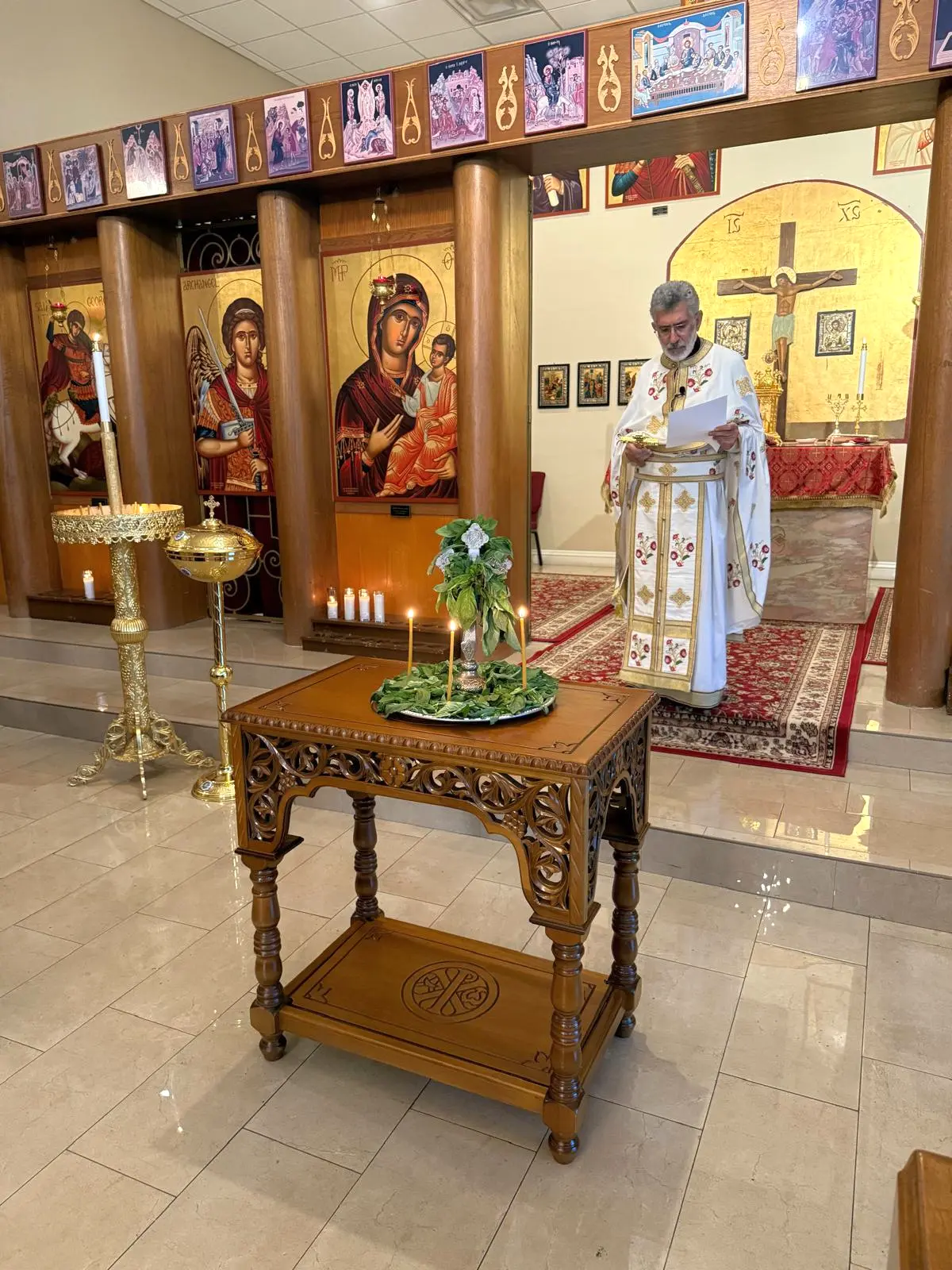
• The Cross is placed on a tray decorated with flowers or basil branches, and set in the center of the church for veneration.
Vespers (on the eve):
• Vespers is served with three Old Testament readings:
• Exodus 15:22–16:1, about the “tree” that made the bitter waters sweet, a symbol of the Tree of the Cross.
• Proverbs 3:11–18, which reminds us that the Lord chastens those He loves, and that Divine Wisdom is “a Tree of Life” to those who embrace her.
• Isaiah 60:11–16, about the “City of the Lord” where Jews and Gentiles shall worship together at God’s feet and know Him as Savior and Redeemer.
Matins:
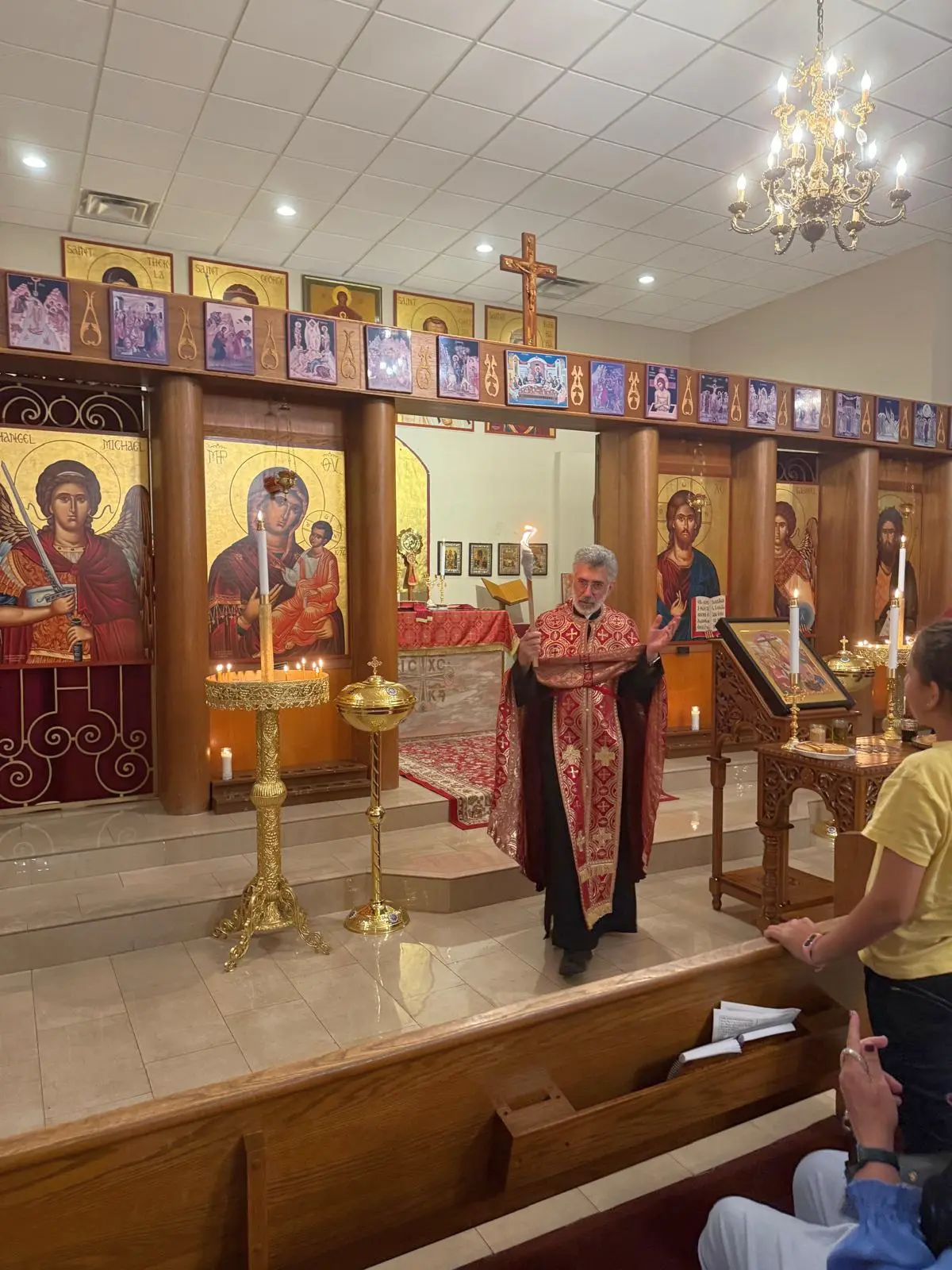
• Celebrated in the morning of the feast. The priest blesses the Cross in the four directions, while the people chant: “Lord, have mercy.”
• The Gospel of Matins is John 12:28–36, where Christ says: “And I, if I am lifted up from the earth, will draw all men to Myself.”
Divine Liturgy:
• The antiphons are replaced with special verses from Psalms 22, 74, and 99, which refer to Christ’s crucifixion.
• The Trisagion Hymn (“Holy God…”) is replaced with the hymn “Before Thy Cross, O Master, we bow down”, during which the faithful make prostrations.
• The Epistle is 1 Corinthians 1:18–24: “The message of the Cross is foolishness to those who are perishing, but to us who are being saved it is the power of God.”
• The Gospel is John 19:6–11, 13–20, 25–28, 30–35, the account of the Lord’s Passion.
⸻
The Icon
The Orthodox icon of the Elevation of the Cross shows the finding and lifting of the Cross.
• On one side is Saint Helena the Empress, who discovered the Cross on Golgotha in 326 AD.
• On the other side is Emperor Heraclius, entering Jerusalem not in earthly splendor, but in humility, clothed in sackcloth and barefoot, carrying the Cross which he recovered from the Persians in 630 AD.
• Thus the icon unites both events, proclaiming that the Cross in every age is the victory of the Church and the sign of life and hope.
⸻
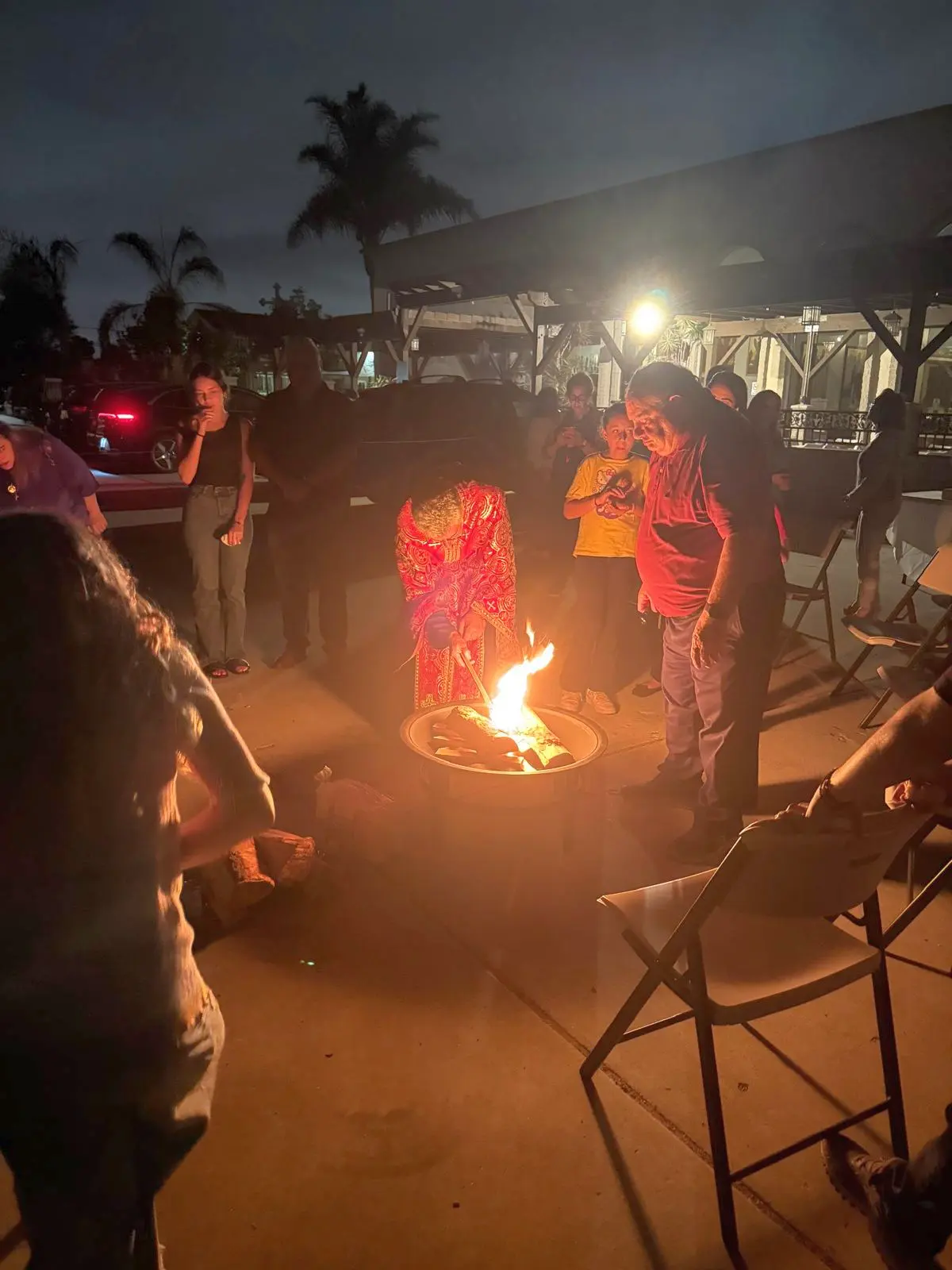
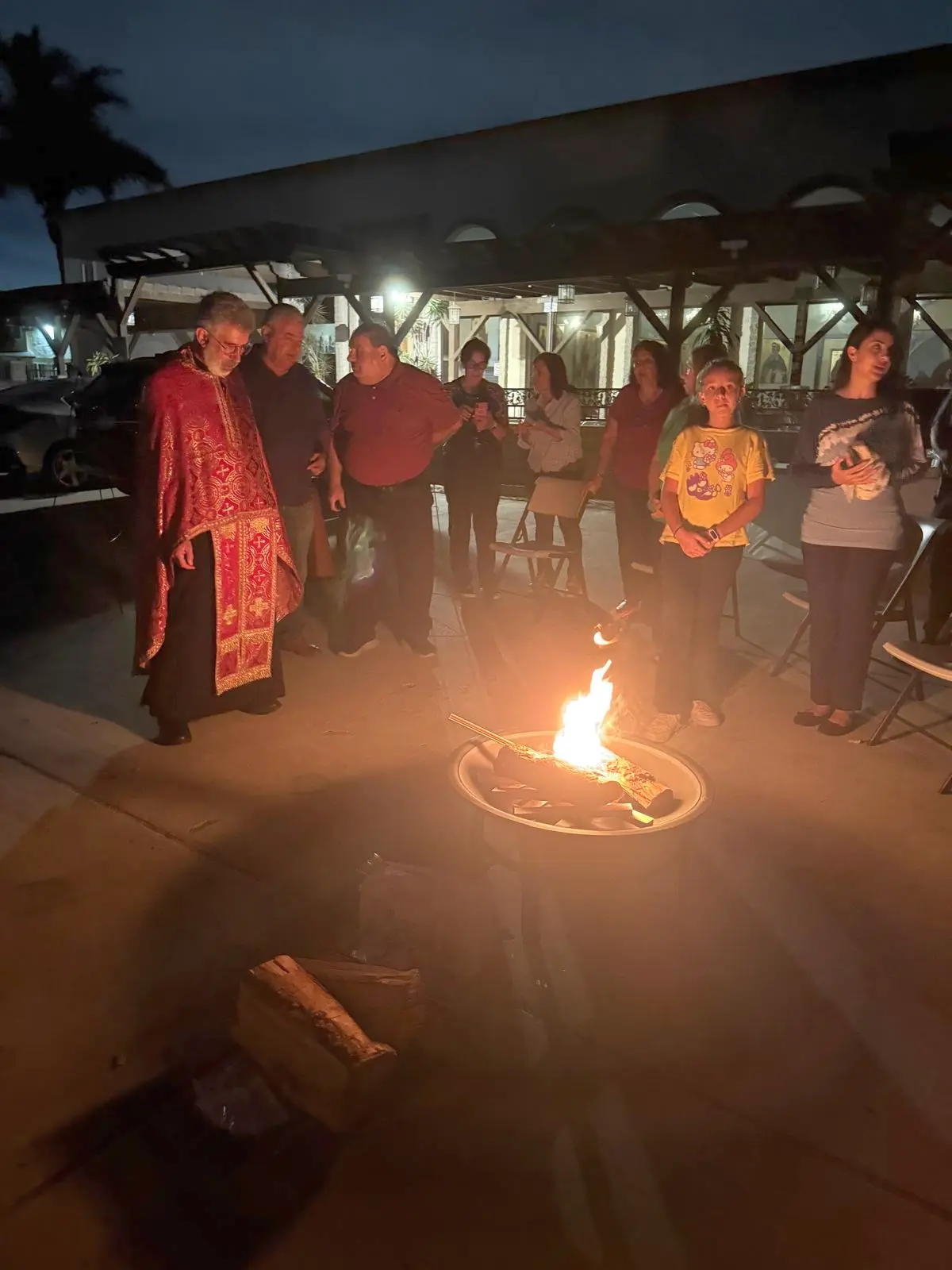
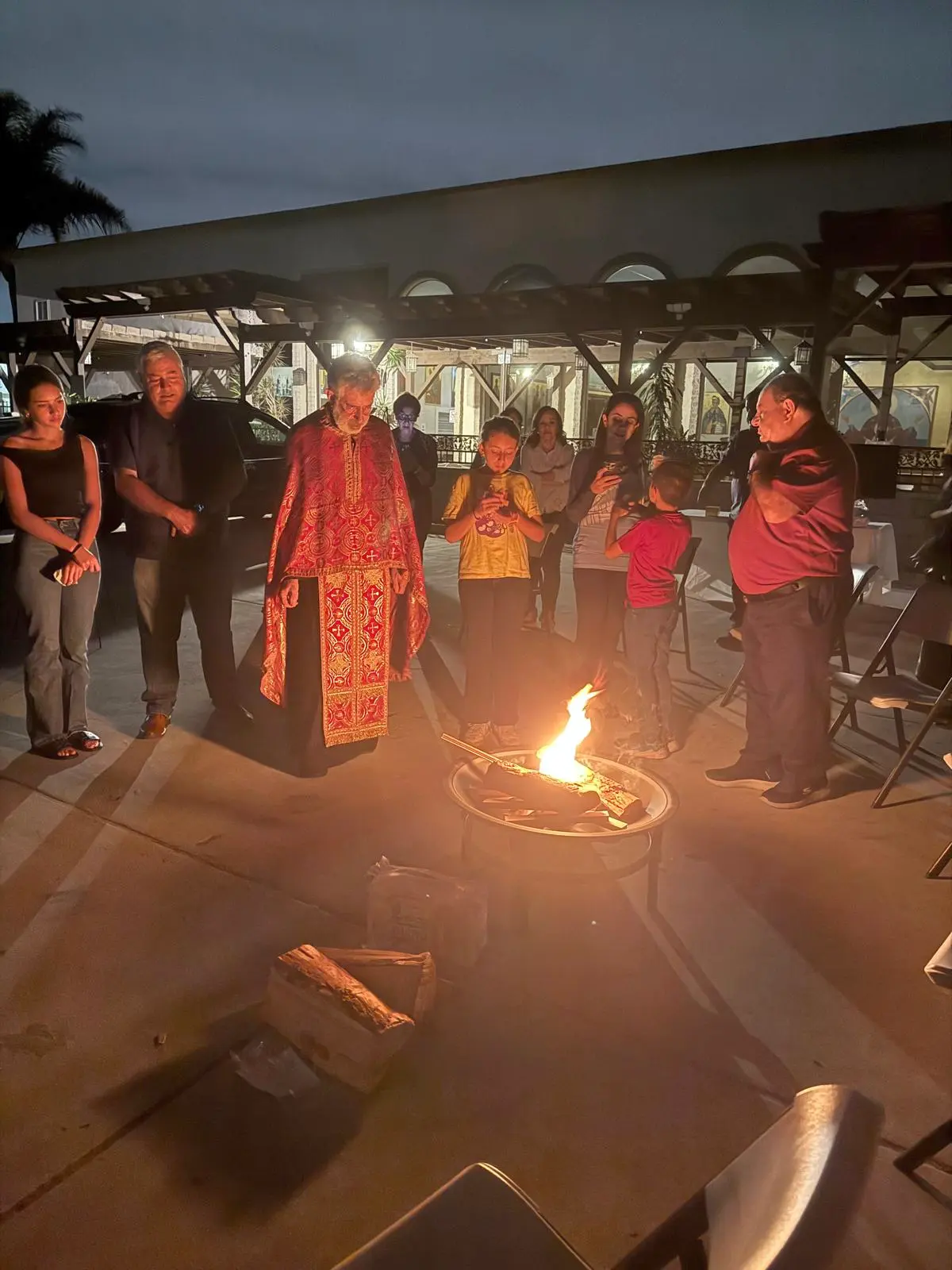
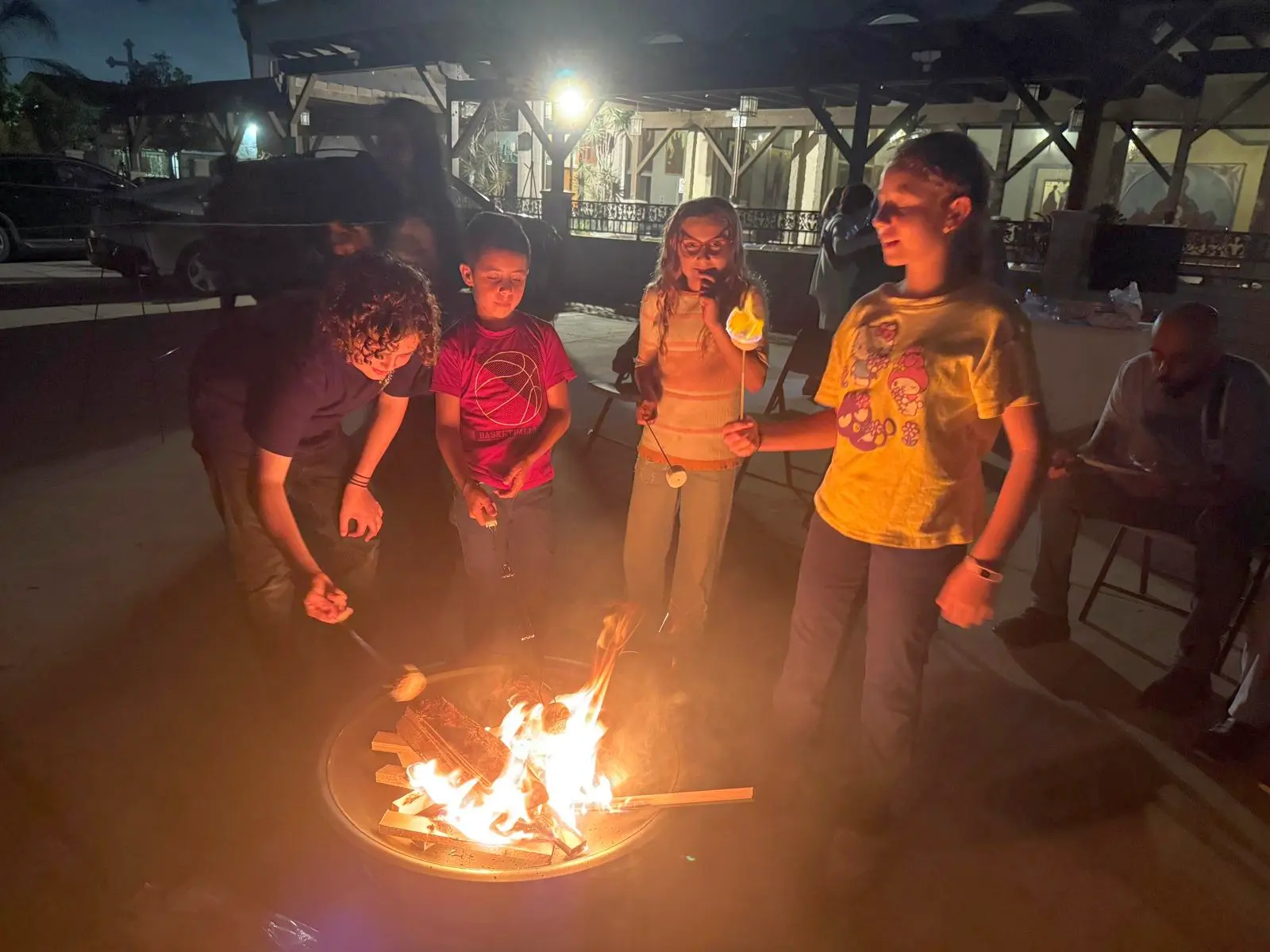
The Fire
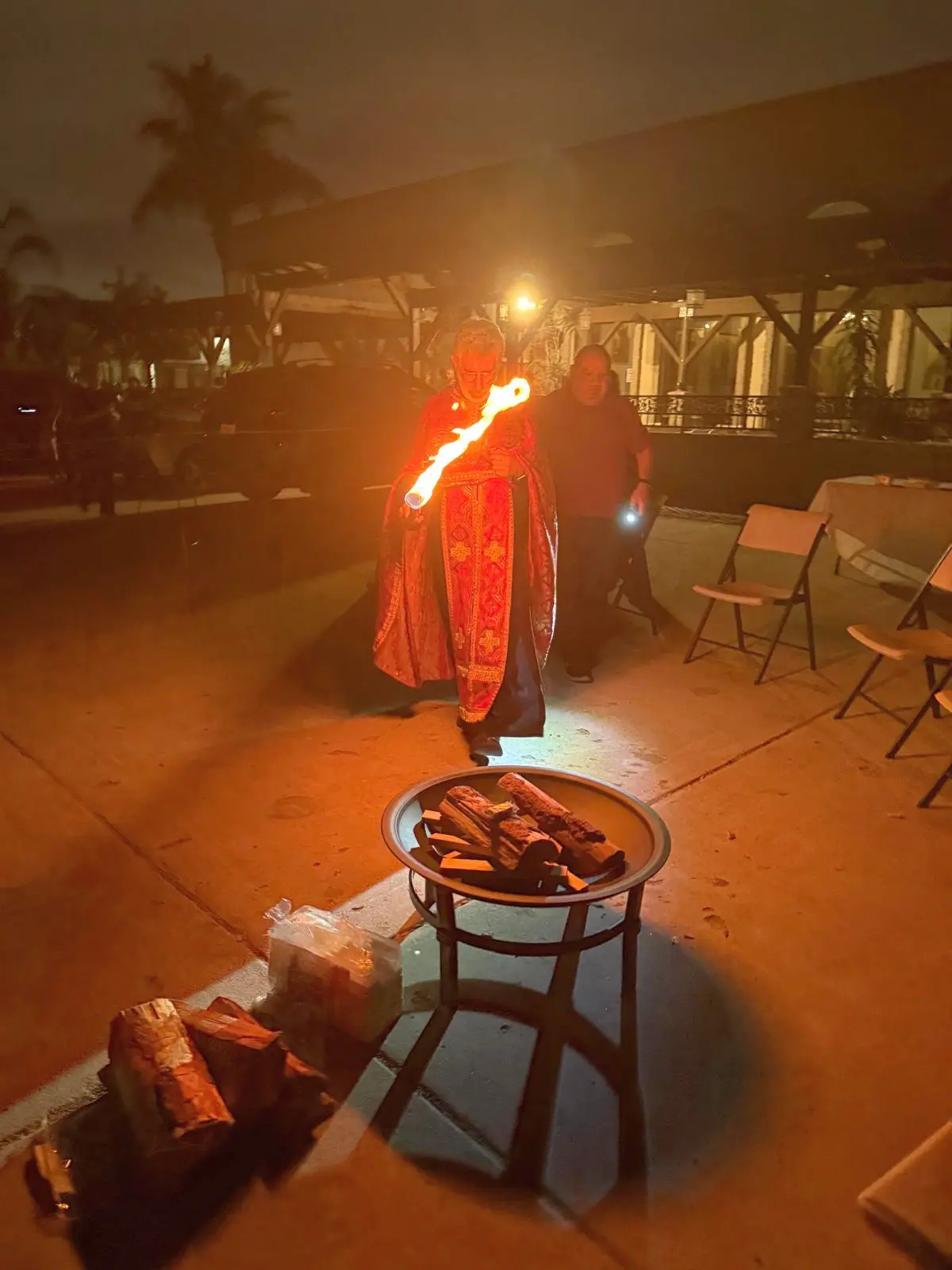
When Saint Helena found the Precious Cross in Jerusalem, she wished to share the good news with her son, Saint Constantine the Great, who was in Constantinople. But in the 4th century there was no quick way of communication. Therefore, she ordered her soldiers to light fires on the mountaintops, so that the flame would be passed from mountain to mountain, beginning in Jerusalem and reaching all the way to Constantinople.
In this way, the news reached the people of Constantinople, and they rejoiced and celebrated together with Jerusalem the discovery of the Precious Cross.
Over time, this custom of lighting fires became a liturgical remembrance in some Orthodox Churches, where the bonfire symbolizes the spreading of the good news of the finding of the Cross.
 Thus the fire symbolizes:
• The rapid spread of the good news (from mountain to mountain, as the Gospel spreads throughout the world).
• The light of the Cross, which illumines the whole universe and scatters darkness.
• A sign of joy and victory, since the Cross is at once suffering and resurrection, death and life, apparent defeat but eternal triumph in truth.
عيد رفع الصليب الكريم المحيي هو أحد الأعياد السيّدية الكبرى في الكنيسة الأرثوذكسيّة، يُعيَّد له في الرابع عشر من أيلول/سبتمبر. ويُعرف أيضاً باسم عيد ارتفاع الصليب. وهو أيضاً يوم اسم شائع لمن يحملون اسمي ستافرولا/ستافروس (من اليونانية ستافروس أي: صليب).
هذا العيد يخلّد حدثين رئيسيين:
1. العثور على الصليب على يد القديسة الملكة هيلانة، والدة القديس قسطنطين الكبير، على جبل الجلجثة سنة 326 م، في الموضع الذي صُلب فيه المسيح.
• في ذلك الموضع وجدت القديسة هيلانة زهرة لم تكن معروفة من قبل، ذات جمال وعطر فريد، دُعيت فاسيليكو (βασιλικόν)، أي الريحان أو “نبات الملك”، لأن كلمة فاسيليوس باليونانية تعني “الملك”. وهكذا ارتبط نبات الريحان بالصليب الكريم للملك السماوي، ربنا يسوع المسيح، ملك المجد.
• تحت الريحان وُجد صليب المسيح، ومعه صليبا اللصين، وكذلك اللوحة التي كُتب عليها: “يسوع الناصري ملك اليهود”. وللتأكد من الصليب الحقيقي، أُحضرت امرأة مريضة لتقبّل الصلبان الثلاثة: فلم يحدث شيء عند الأول والثاني، ولكن عندما قبّلت الصليب الحقيقي شُفيت حالاً. وعند مرور جنازة في المكان، وُضع جسد الميت على كل صليب، ولما وُضع على الصليب الكريم عاد إلى الحياة. ومن هنا دُعي الصليب “المحيي”، لأنه لا يعطي الحياة لذلك الرجل فقط، بل لكل من يؤمن بذبيحة المسيح وقيامته الممجَّدة في اليوم الثالث.
• وعندما تأكد أنه الصليب الحقيقي، رُفع عاليًا ليراه الشعب، وكانوا يهتفون: “يا رب ارحم”، كما لا يزال يُرتل في طقوس العيد حتى اليوم.
2. استرداد الصليب من الفرس بعد أن سبوه عند اجتياحهم أورشليم سنة 614 م. وبعد أن انتصر الإمبراطور هرقل على الفرس الساسانيين في معركة نينوى سنة 627 م، استعاد الصليب الكريم وأضعف قوة السلالة الساسانية.
• وفي الحادي والعشرين من آذار سنة 630 م دخل الإمبراطور هرقل أورشليم مع البطريرك زخاريا (609–632)، بفرح عظيم، حاملاً الصليب ليعيده إلى كنيسة القيامة. لكن لما حاول أن يدخل بثيابه الملكية المذهّبة، منعه ملاك الرب قائلاً: “بهذا اللباس الملوكي لا يليق أن تدخل، لأن الملك السماوي دخل حاملاً صليبه بتواضع.”
• عندها عاد هرقل في اليوم التالي، لابسًا المسوح، حافي القدمين، واتشح بروح التوبة والاتضاع، فحمل الصليب ورفعه بموكب ملوكي روحي، وأدخله إلى كنيسة القيامة حيث قُدم للسجود من قبل المؤمنين.
الاحتفال بالعيد
• هو يوم مقدس للتوبة والصوم. فيه يُجدّد المؤمنون عهودهم أمام الرب المصلوب، ويسجدون عند قدميه على الصليب المحيي.
• يوضع الصليب في طبق مُزيَّن بالزهور أو بأغصان الريحان، ويوضع في وسط الكنيسة ليتبارك به المؤمنون.
عشية العيد (الغروب):
• يُرتل الغروب مع ثلاث قراءات من العهد القديم:
• الخروج 15: 22–16: 1 عن “الخشبة” التي حوّلت المياه المرّة إلى عذبة، رمز خشبة الصليب.
• الأمثال 3: 11–18 التي تذكر أن الرب يؤدب من يحبهم، وأن الحكمة الإلهية هي “شجرة حياة” للذين يتمسكون بها.
• إشعياء 60: 11–16 عن “مدينة الرب” حيث يسجد اليهود والأمم عند قدمي الله ويعرفون أنه المخلّص والفادي.
صلاة السحر (الماتين):
• تُقام صباح العيد. يُبارك الكاهن الصليب في الجهات الأربع، ويردد الشعب: “يا رب ارحم”.
• إنجيل السحر هو يوحنا 12: 28–36 حيث يقول المسيح: “وأنا إن ارتفعت عن الأرض أجذب إليّ الجميع.”
القداس الإلهي:
• تُستبدل الأنتيفونات بآيات خاصة من المزامير (22، 74، 99) تشير إلى صلب المسيح.
• يُستبدل النشيد المثلث التقديس (قدوس الله…) بترنيمة لصليبك يا سيدنا نسجد، حيث يسجد المؤمنون أثناء ترديدها.
• الرسالة: ١ كورنثوس 1: 18–24: “كلمة الصليب عند الهالكين جهالة، وأما عندنا نحن المخلَّصين فهي قوة الله.”
• الإنجيل: يوحنا 19: 6–11، 13–20، 25–28، 30–35، وهو سرد آلام الرب.
⸻
الأيقونة
الأيقونة الأرثوذكسيّة لعيد رفع الصليب تُظهر مشهد العثور على الصليب ورفعه.
• في جانب منها تُصوَّر القديسة الملكة هيلانة، التي وجدت الصليب على الجلجثة سنة 326م.
• وفي الجانب الآخر يُصوَّر الإمبراطور هرقل، وهو يدخل أورشليم بالتواضع لا بالمجد الأرضي، لابسًا المسوح وحافي القدمين، حاملاً الصليب الذي استرده من الفرس سنة 630م.
• وبهذا تجمع الأيقونة بين الحدثين، لتُعلن أن الصليب في كل الأزمنة هو انتصار الكنيسة وعلامة الحياة والرجاء.
إشعال النار:
عندما وجدت القديسة هيلانة الصليب الكريم في أورشليم، أرادت أن تُبشِّر ابنها القديس قسطنطين الكبير بالخبر السار وهي في أورشليم وهو في القسطنطينية. ولكن في القرن الرابع لم يكن هناك وسيلة سريعة للتواصل. لذلك أمرت جنودها أن يشعلوا النيران على قمم الجبال، بحيث تُنقل الشعلة من جبل إلى آخر، ابتداءً من أورشليم حتى القسطنطينية.
وبهذا وصلت البشرى إلى شعب القسطنطينية، ففرحوا واحتفلوا بعثور الكنيسة على الصليب الكريم مع أورشليم.
ومع مرور الزمن أصبح هذا التقليد في إشعال النيران ذكرى طقسية في بعض الكنائس الأرثوذكسيّة، رمز إشعال النار إلى انتشار البشرى بإيجاد الصليب.
وهكذا ترمز النار إلى:• انتشار الخبر السار بسرعة (من جبل إلى جبل، كما ينتشر الإنجيل في العالم).
• نور الصليب الذي يضيء المسكونة كلها ويبدد الظلمة.
• رمز الفرح والانتصار، كما أن الصليب هو في آنٍ واحد آلام وقيامة، موت وحياة، هزيمة في الظاهر لكن نصر أبدي في الحقيقة.